SEO and Digital Marketing Industry Trends What Happened and What to Expect in 2027
What changed in 2026 SEO and how to prepare for 2027. AI search expanded, agents became real, and tracking evolved. Get ready for big changes. Learn from SEO shifts.
In 2026, SEO moved beyond keyword rankings. AI Overviews, LLM answers, short-form video, Reddit discussions, and zero-click journeys changed how people discover brands before visiting a website. For 2027, the main challenge is not only to rank, but to stay visible across every surface where search decisions happen.
The Defining Trends
2026 marked the transition from experimental AI features to mainstream search dominance. Traffic attribution models changed fundamentally with cookie deprecation and platform diversification. The tool ecosystem expanded with AI-powered solutions like LLM brand trackers, AI Humanizers and AI detectors, entering the market alongside established platforms. Multi-platform optimization across Google, TikTok, Reddit, and ChatGPT became increasingly important for the market coverage.
Multiple trends shaped professional SEO practice, each with a measurable impact on traffic patterns, ranking factors, and operational approaches. Understanding the precise timeline of adoption enables strategic allocation for 2026.
AI-Powered Search
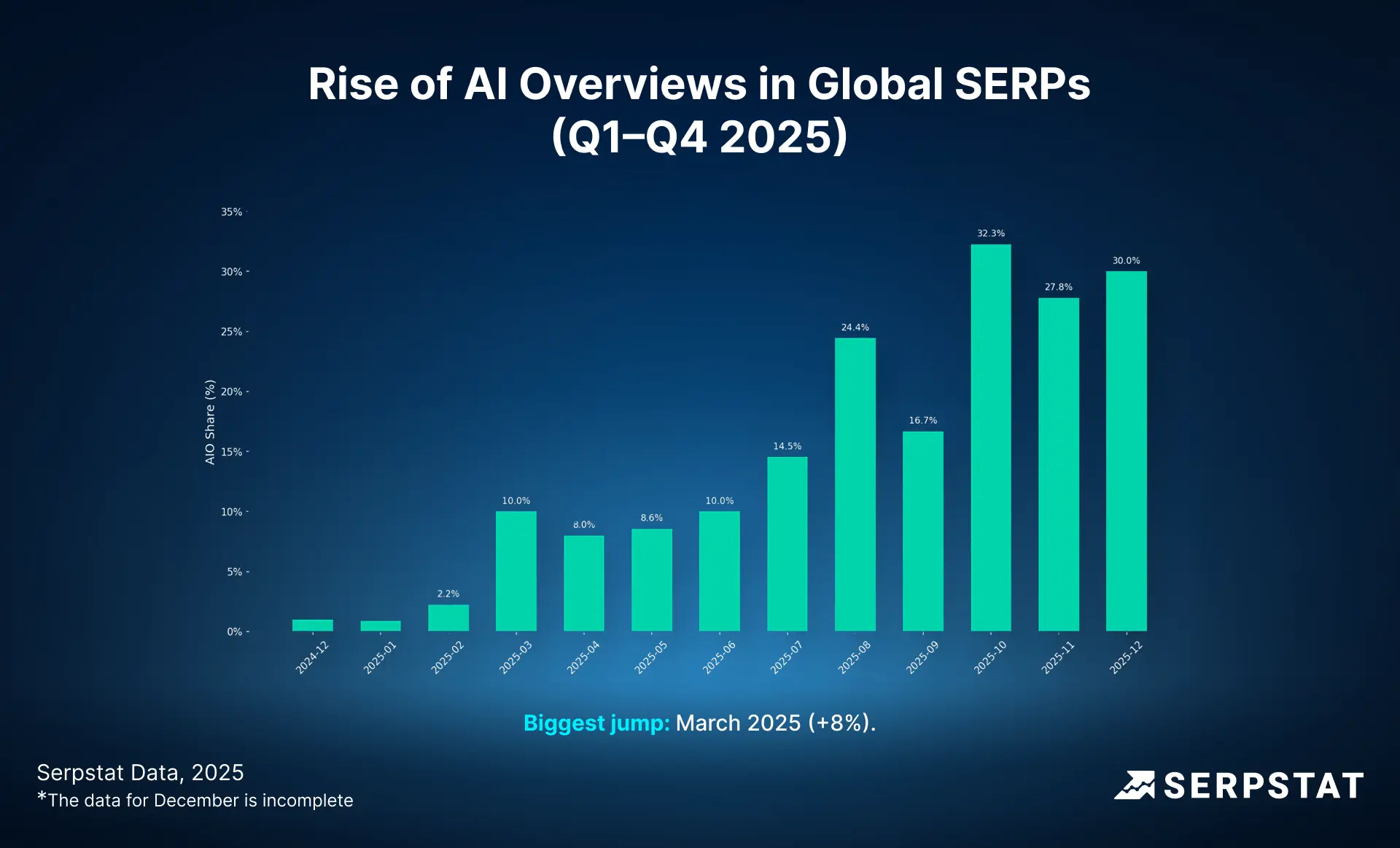
Google's Search Generative Experience (SGE), which began experimental testing in May 2023, expanded throughout 2024 and 2025. The feature, now called AI Overviews, reached global availability across multiple markets, fundamentally altering how search results appear and how users interact with search engines.
According to 2024 research, zero-click searches reached 58.5% of all Google searches in 2024, up from 25.6% in 2020. This represents a shift in search behavior where users increasingly find answers directly in search results without clicking through to websites.
Early research suggests that content appearing in AI Overviews tends to share certain characteristics:
Pages with clear structure,
authoritative backlink profiles,
concise factual information appears more frequently as cited sources,
structured data, particularly FAQ and HowTo schema.
The shift requires content creators to consider both traditional ranking factors and the new reality of source attribution within AI-generated summaries. Domain authority continues to matter, with higher-authority sites appearing more frequently as cited sources in observed AI Overview results.
E-E-A-T: Experience as a Ranking Signal
Google officially added "Experience" to its E-A-T (Expertise, Authoritativeness, Trustworthiness) framework in December 2022, creating the E-E-A-T framework. This update formalized the importance of firsthand, demonstrable experience in content quality assessment, particularly for Your Money or Your Life (YMYL) topics.
The Search Quality Rater Guidelines emphasize, "Consider the extent to which the content creator has the necessary first-hand or life experience for the topic." This signals a clear preference for content created by people with direct experience rather than purely theoretical knowledge.
The enforcement of experience signals became more apparent in search results, particularly for product reviews, medical information, financial advice, and how-to content. Websites demonstrating clear author expertise and firsthand experience showed improved resilience during core algorithm updates.
Demonstrable Experience in Practice
Content incorporating verifiable proof of experience performs differently than generic aggregated information. This includes elements like personal testing documentation, original photography, video demonstrations of processes, purchase verification, and specific data from firsthand use.
Google's Product Reviews update guidance explicitly states a preference for reviews that "include evidence such as visuals, audio, or other links of the reviewer's own experience with the product." This principle has expanded beyond product reviews to broader content categories.
The practical implementation means content creators should document their experience through screenshots, original images, test results, video walkthroughs, and specific details that only someone with direct experience would know.
Curious about SEO? Start here.
Join our free SEO course and learn the basics with a community of people growing their skills together.
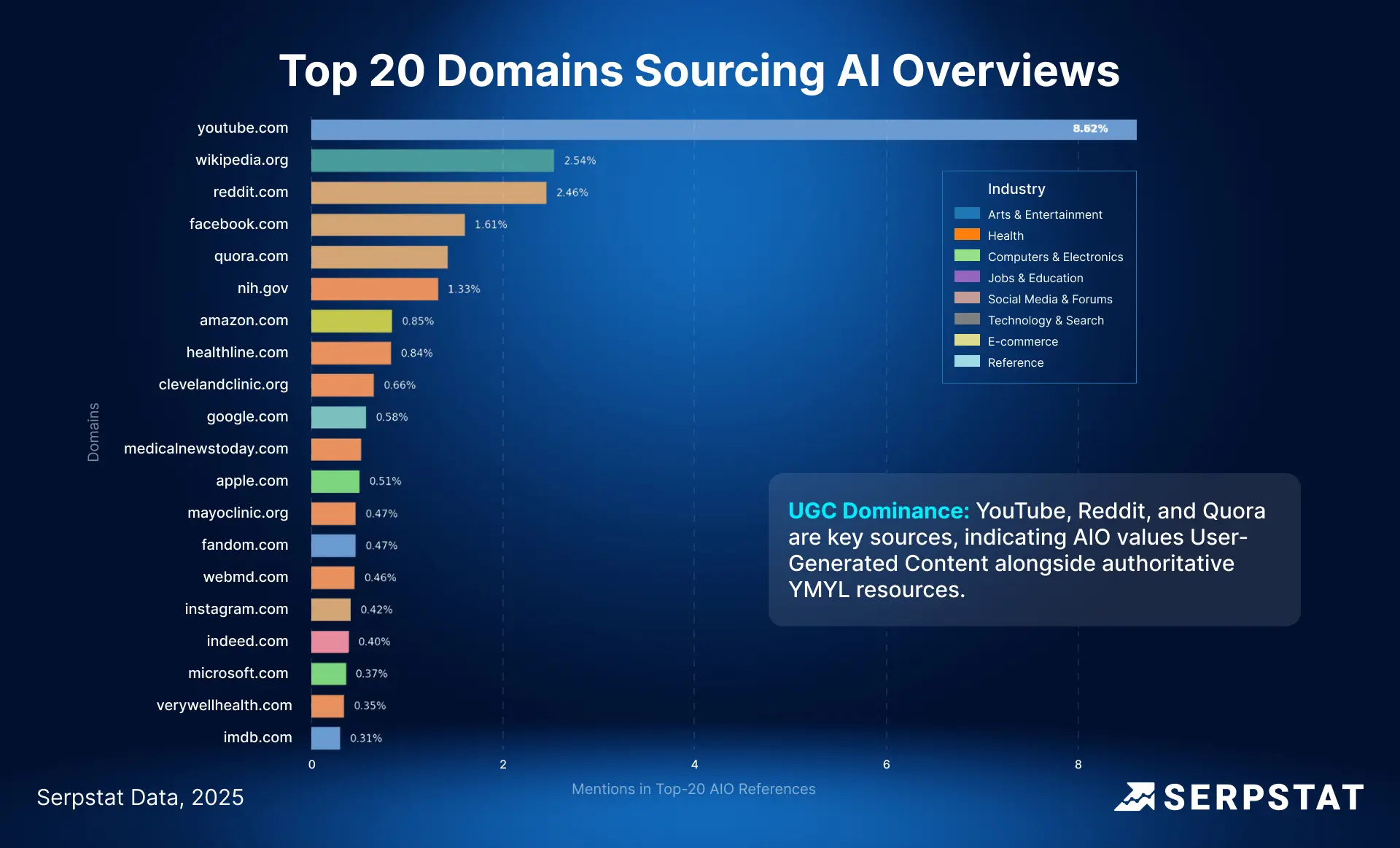
Video content integration increased substantially as Google enhanced video features in search results. YouTube, owned by Google, now appears prominently for informational and commercial queries, with video results often occupying multiple positions on page one.
Businesses using video content on landing pages see improved engagement metrics and time-on-page compared to text-only equivalents. The specific impact varies by industry and implementation quality.
The optimal strategy that emerged involves short-form video for quick answers and featured snippets, while long-form video serves comprehensive educational content. This dual approach addresses different user intents and device contexts.
YouTube as a Parallel Search Engine
YouTube processes billions of searches daily, according to YouTube's official statistics, making it the second-largest search engine after Google itself. Research from Think with Google indicates that a significant percentage of B2B buyers use YouTube for product research before making purchasing decisions.
Sites incorporating video content, particularly from their own YouTube channels, benefit from additional visibility opportunities across both Google search and YouTube's platform. Video schema implementation helps search engines understand video content and can result in enhanced search result appearances, including video thumbnails and key moments.
Platform Diversification: The Multi-Channel Search Reality
TikTok and Reddit as Discovery Platforms
TikTok's search functionality grew in 2024-2025, with the platform emphasizing search features and creator discoverability. TikTok's official statements confirm billions of daily users actively using search functionality within the app.
Reddit experienced significant traffic growth following expanded integration with Google search results. Enhanced Reddit visibility resulted in Reddit threads appearing more prominently for informational queries, particularly for experience-based questions and recommendations.
ChatGPT Search and Conversational AI Discovery
OpenAI launched ChatGPT search functionality in October 2024, introducing real-time web search capabilities to ChatGPT. This represents a new search paradigm where users interact conversationally rather than with traditional keyword queries.
Other AI platforms, including Perplexity AI and Microsoft Copilot, similarly integrated search capabilities, creating a new category of "answer engines" that synthesize information from multiple sources rather than simply ranking pages. Early adoption data suggests these platforms attract users seeking direct answers and research assistance.
The requirements differ from traditional SEO, emphasizing conversational language, clear factual statements, authoritative sources, and direct answer formatting. Content structured around questions and concise answers appears more frequently in AI-generated responses.
SEO Tool Ecosystem Evolution
Platform Pricing and Market Changes
The SEO tool market experienced significant changes as major platforms added AI-powered features and adjusted pricing structures. Many established platforms increased subscription costs, citing enhanced AI capabilities and expanded feature sets as justification.
Simultaneously, new AI-native tools entered the market at various price points, creating more options for different budget levels and use cases. The market is segmented into comprehensive enterprise platforms serving agencies and large teams versus specialized tools serving specific functions like content marketing, keyword research, or technical auditing.
This bifurcation created choices for SEO practitioners between all-in-one suites versus assembled toolkits combining specialized solutions. The optimal choice depends on team size, budget constraints, and specific workflow requirements.
AI-Powered SEO Tools Emergence
AI-powered content tools, rank tracking platforms, technical SEO analyzers, and reporting systems leverage large language models and machine learning to automate tasks previously requiring significant manual effort.
The functionality ranges from AI-assisted content briefs and optimization suggestions to automated technical audits and predictive analytics. Adoption accelerated among practitioners seeking efficiency improvements, though quality control and strategic oversight remain necessary human responsibilities.
The cost structure of AI-native tools typically offers lower entry points than traditional comprehensive platforms, making professional-grade SEO capabilities more accessible to smaller businesses and independent consultants.
AI Content Governance
Adoption Patterns and Use Cases
AI content marketing saw widespread adoption throughout 2024-2025. Search Engine Journal's industry surveys and other research indicate that a majority of SEO professionals now use AI assistance for at least some content production stages, from research and outlining to drafting and improving.
The highest adoption rates appear in programmatic SEO applications, including location pages, product descriptions, FAQ content, and templated information where structure remains consistent across many pages. Conversely, thought leadership content, expert analysis, and brand-critical messaging remain predominantly human-created.
Google's official position, stated in guidance on AI-generated content, focuses on content quality regardless of production method: "Our focus on the quality of content, rather than how content is produced, is a useful guide that has helped us deliver reliable, high-quality results to users for years."
Quality Considerations and Best Practices
Industry observations suggest that hybrid workflows combining AI efficiency with human expertise, fact-checking, and original insights produce optimal results.
The effective approach involves using AI for initial drafts, research synthesis, and structural suggestions while requiring human editors to verify accuracy, add unique perspectives, incorporate firsthand experience, and ensure brand voice consistency. This balances efficiency gains with quality requirements.
Quality control becomes paramount as AI tools can generate plausible-sounding but factually incorrect information, miss context and nuance, and produce generic content lacking differentiation. Human oversight prevents these issues while capturing efficiency benefits.
Topical Authority and Content Depth
The March 2024 Core Update Impact
Google's March 2024 Core Update specifically targeted low-quality, thin content created primarily for search engine rankings rather than user value. The update documentation emphasized rewarding content demonstrating expertise and original value.
Many sites experienced significant ranking changes, with patterns suggesting that comprehensive topic coverage and clear expertise in specific subject areas received preferential treatment over broad, shallow content across many disconnected topics.
This triggered industry-wide content auditing and pruning initiatives, with many publishers choosing to consolidate, improve, or remove lower-quality pages rather than maintaining large volumes of mediocre content. The focus shifted from quantity to quality and depth.
Content Consolidation and Cluster Strategy
The concept of topical authority through content clusters gained practical validation. Sites organizing content into comprehensive topic hubs with deep coverage and strong internal linking showed improved performance compared to scattered individual articles on disconnected subjects.
Content pruning emerged as a legitimate strategy, with practitioners removing or consolidating pages that provided minimal user value, attracted little traffic, earned no backlinks, and diluted site quality. Many reported improved overall site performance after strategic content removal, contrary to the assumption that more pages always equals better results.
The optimal approach involves identifying core topics aligned with business goals and expertise, then creating comprehensive coverage through multiple interconnected pieces that thoroughly address user needs and questions within those topics. This builds demonstrable topical authority rather than surface-level keyword targeting.
Link Building Evolution and Modern Strategies
Traditional Outreach Effectiveness Decline
Traditional link building through manual outreach for guest posts and link placements faced increasing challenges. Email response rates declined as site owners received overwhelming outreach volumes, much of it automated or templated.
The effectiveness of basic outreach diminished as recipients became better at identifying and ignoring generic link requests. Meanwhile, AI-generated outreach emails, while easier to create at scale, achieved even lower response rates due to detectable patterns and lack of personalization.
This created increasing returns to genuinely personalized outreach, relationship building, and value-first approaches where link requests come after establishing genuine connections and providing real value to potential linking sites.
Digital PR and Asset-Based Link Building
Digital PR emerged as increasingly effective, with original research, newsworthy content, data studies, and expert commentary attracting editorial links from journalists and publishers. These links typically come from higher-authority domains and provide greater ranking value than typical guest post links.
Similarly, creating genuinely useful free tools, calculators, templates, and resources that solve real problems generates ongoing link acquisition without active outreach. Once created, these assets continue attracting links as people discover and reference them naturally.
The investment shifts from ongoing outreach labor to upfront asset creation, whether that's conducting original research, building useful tools, or developing resources worthy of citation. This approach emphasizes creating link-worthy content rather than requesting links to standard content.
Privacy-First Tracking and Attribution Challenges
Cookie Deprecation Timeline and Impact
Google delayed third-party cookie deprecation in Chrome multiple times. However, other browsers, including Safari and Firefox, already blocked third-party cookies, and privacy regulations like GDPR and CCPA created compliance requirements affecting tracking capabilities.
The practical impact meant that traditional cookie-based attribution became increasingly unreliable even before complete Chrome deprecation. Marketers reported declining visibility into customer journeys and difficulty attributing conversions to specific touchpoints.
Marketing research and industry surveys documented widespread challenges with attribution accuracy as privacy measures expanded. The percentage of marketers reporting attribution difficulties increased.
First-Party Data Strategies
Companies responded by investing in first-party data collection strategies, including email capture optimization, customer data platforms, CRM integration, and server-side tracking implementations. These approaches rely on data users voluntarily share rather than third-party tracking.
Server-side tracking through tools like Google Tag Manager's server-side configuration provides more reliable data collection while maintaining privacy compliance. However, implementation requires technical expertise and ongoing maintenance.
The strategic shift involves building direct relationships with audiences, encouraging account creation and email subscription, and creating value exchanges where users willingly share data in return for personalized experiences, exclusive content, or other benefits.
Conversational Queries
Smart speaker ownership continued growing in 2025-2026, with devices from Amazon, Google, Apple, and others becoming common household items. Voice search queries differ structurally from typed searches, trending more conversational and question-based (same as AI prompts, ChatGPT-style queries). Users speaking to devices tend to use complete sentences and natural language rather than keyword fragments.
The impact appears most pronounced for local searches, quick facts, and informational queries where users want immediate spoken answers. Voice assistants frequently pull answers from featured snippets (position zero) in Google search results.
The conversational search optimization includes using question-based headings that match natural language queries, providing concise answers immediately following questions, implementing FAQ schema markup, and structuring content for easy extraction and voice delivery.
Local businesses benefit particularly from optimization, as "near me" queries and local informational searches represent common voice search use cases. Ensuring accurate Google Business Profile information and location-specific content helps capture these queries.
2027 Predictions Based on Current Trends
Based on observable trend patterns, technology development timelines, and industry momentum, several predictions emerge. Each projection reflects current trajectory analysis rather than speculation.
Expanded AI Overview Integration
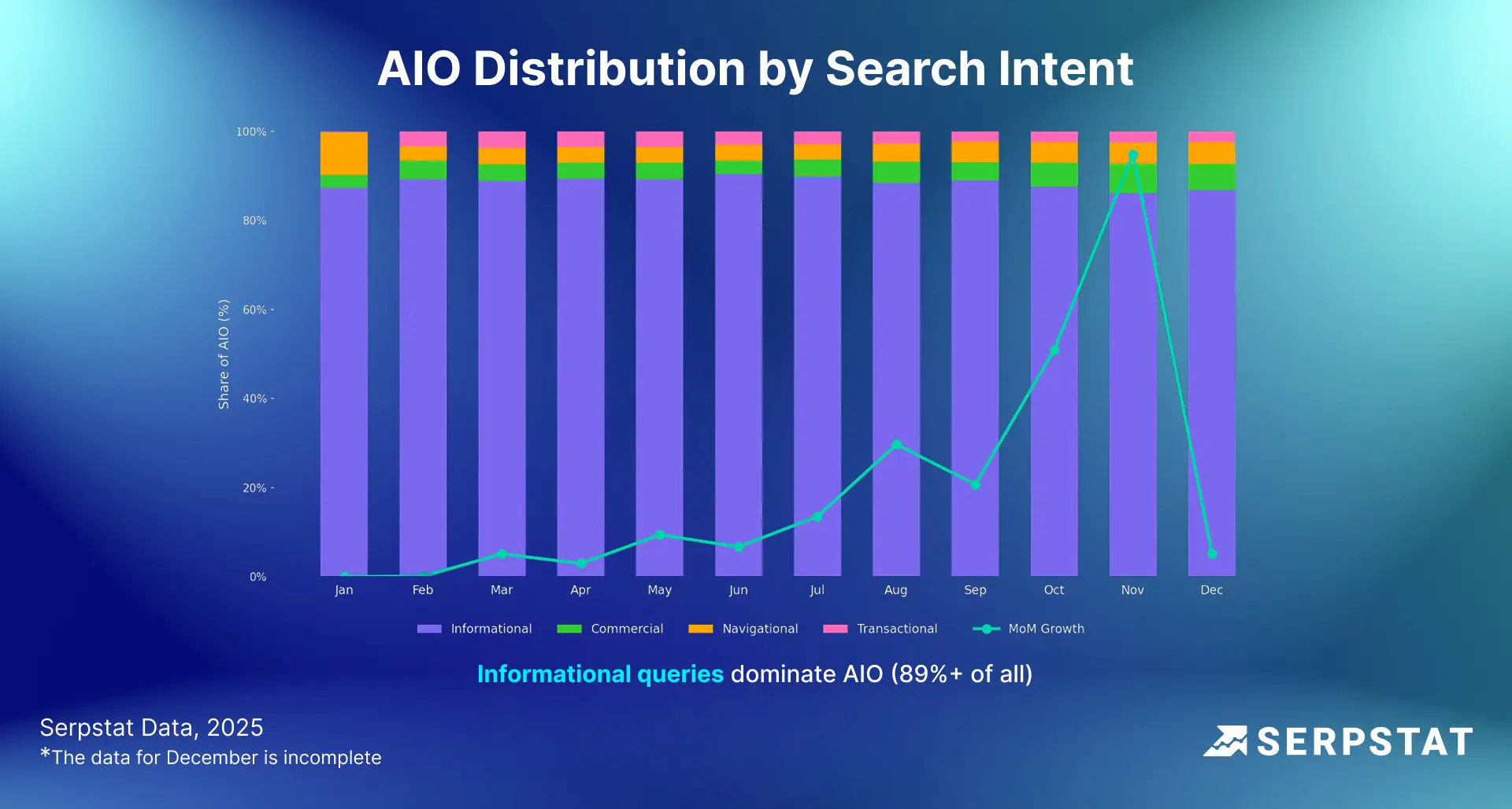
Google continues expanding AI Overview and AI mode availability. The feature began as an opt-in experiment, transitioned to broader availability, and appears increasingly across query types (mostly informational).
The logical progression suggests continued expansion throughout, potentially becoming the default search experience for most informational queries. This fundamentally changes optimization strategy from ranking in traditional blue links to earning citations in AI-generated summaries.
Zero-click search percentages will likely continue increasing as users find answers directly in search results without clicking through to websites. This requires rethinking success metrics beyond traditional click-through rates and rankings.
Content marketing strategy must evolve to prioritize citation-worthiness alongside traditional ranking factors. Content needs to serve both purposes: providing comprehensive information for users who click through while also offering easily extractable facts for AI summary inclusion.
The fundamentals of expertise, authority, and trustworthiness become even more critical. Sites beginning this strategic shift early position themselves advantageously, while competitors focusing solely on traditional ranking factors may experience visibility decline as AI Overviews expand.
Video Content Reaches Wide Adoption
Video Saturation in Competitive Verticals
Video integration in search results continues accelerating based on current adoption curves. Competitive keywords in many verticals already show video content dominating page one results, and this pattern expands to additional query types and industries.
By late 2026, video content may become common for competitive visibility in commercial and informational queries, particularly in competitive niches. Text-only content may need stronger structure, originality, and supporting formats to compete.
The production quality bar also rises as more businesses invest in video capabilities. Basic smartphone videos that succeeded in early adoption phases face competition from professionally produced content as the medium matures.
Multi-Format Video Strategy (Social media trends)
Optimal video strategy likely requires multiple formats serving different purposes and platforms. Short-form vertical video at 30 to 60 seconds captures mobile users and featured snippets. Long-form horizontal content at 8 to 20 minutes serves comprehensive educational needs.
Platform-specific optimization becomes necessary, with different formats and styles for YouTube, TikTok, Instagram, LinkedIn, and embedded website video. Cross-platform distribution maximizes visibility across diverse user behaviors and platform preferences.
Investment in video production capability, whether in-house or through agencies, becomes a strategic priority rather than an optional enhancement for businesses serious about digital presence.
AI Agents as Workflow Automation
One-Button Solutions for Routine Tasks
Current tools already handle discrete SEO tasks like keyword research, content outlining, and technical auditing. The trajectory points toward more comprehensive agents managing entire workflows with minimal human intervention.
AI agents may routinely handle complete processes from initial keyword identification through content creation, optimization, publishing, and performance monitoring. This transforms SEO roles from tactical execution toward strategic oversight and quality assurance.
For SEO teams, this means tools need to support automation, API access, integrations, and AI-assisted workflows.
Strategic Oversight as a Differentiator
As AI handles tactical execution, human value concentrates in areas requiring judgment, creativity, strategic thinking, and business context that AI cannot replicate. This includes brand positioning, audience understanding, competitive strategy, and creative differentiation.
The skill premium shifts from technical execution ability toward strategic frameworks, creative problem-solving, effective communication, and business acumen. SEO practitioners who develop these capabilities command higher value than those focusing purely on technical skills facing automation.
Organizations investing in strategic content marketing , creative differentiation, and unique value creation establish advantages that AI tools alone cannot provide for competitors.
AI Avatars Transform Video Production
Synthetic Media Democratizes Video
AI avatar and synthetic media technology continues improving rapidly. Current tools already produce reasonably convincing presenter-style videos without filming equipment or on-camera talent. Quality improvements make this technology increasingly viable for professional use.
This democratizes video content production, enabling businesses without video budgets or on-camera talent to create presenter-style content at substantially lower cost and faster production speed. The barriers to video content creation decrease significantly.
However, audience expectations around authenticity and disclosure also evolve. Users become more sophisticated at identifying synthetic media, and disclosure requirements may emerge through platform policies or regulations. Transparency becomes important for maintaining trust.
Human Authenticity Premium
As AI-generated video becomes common, human-presented content potentially gains premium positioning for trust-critical topics and brand-building applications. The optimal strategy likely involves using AI avatars for scalable educational content while reserving human presenters for expertise demonstration and relationship building.
Brand voice, personality, and authentic expertise remain valuable differentiators that synthetic media struggles to replicate convincingly. The strategic allocation of resources between AI efficiency and human authenticity becomes a key decision point.
Early adopters of avatar technology gain cost and speed advantages, but maintaining quality standards and appropriate use cases prevents brand dilution or trust erosion.
Ranking Metrics Evolution Beyond Traditional Positions
Citation Tracking Complements Position Tracking
Traditional rank tracking for positions 1 through 100 loses relevance as AI Overviews continue to reshape search results and zero-click searches exceed 50%. The meaningful metric shifts from "position 3 for keyword X" to "cited in AI Overview for topic Y."
New measurement tools and methodologies emerge, tracking citation frequency, visibility across AI-generated responses, brand mention prominence, and multi-platform discovery potential. Traditional rank tracking tools adapt or face obsolescence.
SEO reporting evolves from position-centric dashboards to visibility scoring across multiple surfaces, including traditional results, AI overviews, featured snippets, and alternative platforms. Comprehensive visibility measurement replaces single-metric tracking.
Multi-Platform Visibility Scoring
Effective visibility measurement in 2026 requires tracking presence across Google traditional results, AI Overviews, YouTube, TikTok, Reddit, ChatGPT search, and other discovery platforms simultaneously. No single platform provides a complete visibility picture.
Unified visibility scores aggregating presence across these platforms provide more meaningful performance indicators than Google position alone. Budget allocation shifts from single-platform to balanced multi-platform strategies.
The complexity increases but reflects actual user behavior across fragmented discovery paths rather than outdated assumptions about single-platform search dominance.
Creativity and Strategy Trump Technical Execution
AI Automation of Technical Tasks
AI tools increasingly automate technical SEO tasks, including site audits, keyword research, content optimization, link analysis, and reporting. The technical execution skills that previously required extensive training become accessible through AI assistance.
This commoditizes purely technical work while increasing the value of skills AI cannot easily replicate, including strategic thinking, creative differentiation, business acumen, relationship building, and management capabilities.
The compensation and opportunity premium shifts from technical certifications toward demonstrated strategic impact, creative problem-solving ability, and business results. Portfolio evidence of strategic success becomes more valuable than technical credentials.
Human Creativity as a Competitive Advantage
AI-generated content creates baseline information delivery but struggles with unique perspectives, original insights, creative expression, and genuine expertise from lived experience. These human elements become primary competitive differentiators.
Brands investing in creative talent, distinctive voice development, original research, and unique perspectives establish defensible advantages that AI tools cannot easily replicate for competitors. Future content creation bifurcates between commodity information and genuinely differentiated expertise.
Strategic priorities shift from content volume and keyword coverage toward quality, originality, expertise demonstration, and creative differentiation. Teams with original insights, expert input, and strong distribution will be harder to replace with generic AI content.
Strategic Marketing Plan for 2027
Based on verified trend analysis and observable patterns, this prioritized framework outlines immediate Q1, medium-term Q2-Q, and strategic Q4 initiatives with implementation considerations.
Q1— for planning and vendor selection,
Q2 — for technical implementation,
Q3 — for optimization and integration with existing workflows,
Q4 — original research, linkable assets, automation, and advanced reporting.
Priorities (Q1 2027): Foundation Building
AI Overview Optimization (AIO)
Begin restructuring high-value content to improve citation potential in AI-generated search results. Focus on commercial-intent pages and pillar content driving conversions. Prioritize fact density, clear statements, entity markup, and authoritative source citation.
Implement comprehensive structured data across priority pages, particularly FAQ and HowTo schema. Review and strengthen author credentials, expertise indicators, and E-E-A-T signals. Build an authoritative backlink profile through digital PR and asset-based link building.
Target continued AI Overview expansion. This foundational work maintains visibility as search interfaces evolve from traditional results toward AI-generated summaries.
Video Production Capability Development
Establish video production capability through in-house development or agency partnerships. Initial focus on pillar content and high-competition keywords where video presence becomes a competitive necessity.
Begin with a sustainable production schedule rather than an unsustainable burst. Quality and consistency matter more than volume. Develop both short-form content for featured snippets and social platforms plus long-form for comprehensive topics.
Implement video schema, optimize YouTube presence, and create cross-platform distribution workflows.
Six-Month Strategic Initiatives (Q2-Q3 2027)
First-Party Data Infrastructure
Deploy server-side tracking, implement a customer data platform, and integrate CRM with website data to maintain attribution visibility as cookie deprecation completes. This foundational infrastructure enables accurate measurement for all subsequent optimization efforts.
Prioritize email capture optimization, account creation incentives, and value exchanges encouraging voluntary data sharing. Build direct customer relationships less dependent on third-party tracking infrastructure.
This timeline ensures capability before widespread attribution blind spots affect competitors without proper infrastructure.
Multi-Platform Content Distribution
Implement systematic content repurposing workflows, maintaining visibility across Google, YouTube, TikTok, and Reddit. Create primary assets that generate platform-specific variations, maximizing reach across diverse discovery behaviors.
Develop platform-specific content strategies rather than identical cross-posting. YouTube requires different optimization than TikTok, which differs from Reddit community engagement. Tailor the approach while maintaining consistent brand messaging.
Build sustainable workflows preventing burnout from unsustainable multi-platform demands. Prioritize platforms where target audiences actually engage rather than attempting presence everywhere simultaneously.
Long-Term Investments (Q4, 2027)
Topical Authority Development
Conduct content audits identifying cluster opportunities. Consolidate or remove thin content diluting site quality. Develop authoritative topic hubs with comprehensive, interlinked coverage of priority subjects.
Focus on topics aligned with business goals and genuine expertise rather than keyword opportunity alone.
Success metrics include improved rankings for money keywords, reduced volatility during algorithm updates, and increased organic traffic from target topics. This long-term approach builds sustainable advantages rather than chasing short-term tactics.
Asset-Based Link Building
Develop linkable assets, including free tools, original research, calculators, or comprehensive resources that naturally attract links without active outreach. These assets provide ongoing value while generating passive link acquisition.
Investment shifts from continuous outreach labor to upfront asset creation. Once built, quality assets continue earning links as people discover and reference them organically. This creates compounding value over time.
Asset types should align with audience needs and business positioning. Industry calculators, data visualization tools, comprehensive guides, original research studies, and genuinely useful free tools all serve different purposes and audiences.
Prepare Your SEO and Content Marketing Strategy for 2027
The strategic priorities remain clear: restructuring for AI citation optimization, video capability development, and first-party data infrastructure. Organizations implementing these changes in early 2026 position themselves advantageously, while those delaying face competitive disadvantages. These principles succeed regardless of interface changes or algorithm updates.
SEO evolves from keyword-centric technical optimization toward comprehensive digital presence management across search ecosystems. Practitioners adapting measurement frameworks, diversifying channel strategies, and investing in owned assets, including video content, useful tools, and data infrastructure, maintain attribution capability.
Competitive advantages belong to early movers implementing strategic content marketing frameworks before market saturation forces reactive rather than proactive positioning.
SEO in 2026: Key Trends, AI Search Impact, and What to Expect
Maksym Hlovatsky
Creative Copywriter, specializing in SEO articles, and long-form content across digital marketing, healthcare, economy, sports, gaming, and other industries.


.png)




.svg)